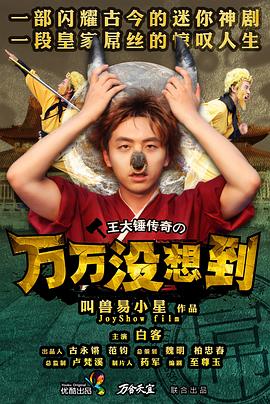
万万没想到 第一季
Right, so, think of it this way: here's Wang Dachui, this quintessential "diaosi," this loser who manages to fail at everything in the most spectacular and entertaining ways. And the sheer audacity! They'd throw him into all sorts of ridiculous situations: Wuxia, modern office life, fairy tales, you name it. It was all fair game for parody. The budget was tiny, I’m sure, but the creativity was off the charts. It was all about how the creativity compensated for the low budget.




剧情简介
Right, so, think of it this way: here's Wang Dachui, this quintessential "diaosi," this loser who manages to fail at everything in the most spectacular and entertaining ways. And the sheer audacity! They'd throw him into all sorts of ridiculous situations: Wuxia, modern office life, fairy tales, you name it. It was all fair game for parody. The budget was tiny, I’m sure, but the creativity was off the charts. It was all about how the creativity compensated for the low budget.
观影点评
Now, the thing is, beyond the sheer fun, *Unexpectedly* was a real cultural moment. It basically defined this whole era of "tucao" – roasting culture, right? It's like, “the ending I never expected”. They had this Wandou Tianyi crew -- Zhang Benyu, Yi Xiaoxing, the whole gang, they were great together, that chemistry. It’s still addictive even today. But what really stayed with me was the emotional resonance. Behind all the laughter, there was this sense of the little person’s struggle, a kind of grassroots optimism. Honestly, it's just plain fun to watch the surreal transitions. One minute he's a hero, then a corporate slave. Even the low-budget charm (those special effects that look like they cost five cents) became part of the appeal. It's the "ancestor" of short videos, and I tell you, its sharp irony, its ability to turn failure into comedy gold, it's something special. It's like a fast-food feast for your brain. I mean, it's an exploration into a "brain-hole," you know, kind of crazy, but brilliant! 【电影介绍】我的生涯一片无悔,想起那天夕阳下的奔跑,那是我逝去的青春。每当这段自带音效的台词在耳边响起,那个面无表情、眼神呆滞,却总能精准踩中生活所有地雷的男人就会浮现在脑海。他叫王大锤,一个在平行时空中拥有无数身份的倒霉蛋,他可能是苦练神功却被五毛钱特效打败的大侠,也可能是为了升职加薪不惜向老板疯狂献媚的职场新人,甚至可能是一个在相亲市场上被反复羞辱的纯情屌丝。 这并不是一部按常理出牌的作品,它更像是一场由无数奇思妙想编织而成的短视频狂欢。每集只有短短五分钟,却塞满了密集的笑点和让人猝不及防的转折。导演易小星用一种近乎自嘲的草根视角,解构了武侠、职场、神话等各种经典场景。在这个世界里,英雄不一定拯救世界,他可能正为了一碗麻辣烫的钱发愁;反派也不一定邪恶,他们可能只是在敬业地配合主角完成那尴尬的戏份。 王大锤那张写满了生无可恋的脸,成了全剧最具标志性的图腾。无论他遭遇了多么荒诞的背叛,或是陷入了多么离奇的绝境,他总能用那句标志性的独白给故事画上一个荒谬的句号。你永远猜不到下一秒剧情会滑向哪个深渊,这种像过山车一样的观影体验,在那个网络剧刚刚起步的年代,简直就像是一道划破沉闷夜空的闪电。 【观影点评】如果说喜剧的内核是悲剧,那么万万没想到则是把这种悲剧用最解构、最戏谑的方式揉碎了喂给观众看。它不仅仅是一部让人捧腹大笑的迷你剧,更是那个时代草根文化的巅峰缩影。在王大锤那些荒唐的失败背后,其实藏着每一个平凡人对生活无奈的吐槽。那种五毛钱特效带来的廉价感,非但没有成为短板,反而变成了一种独特的叙事美学,透着一股一本正经胡说八道的幽默感。 最让我着迷的是它那种快节奏的剪辑和精准的吐槽点。在短视频还没横行霸道的2013年,它就精准地捕捉到了现代人碎片化的审美趣味。剧中的每一个角色,无论是深不可测的父王,还是美艳却总是出戏的保洁小妹,都散发着一种生机勃勃的业余感,这种质感让观众觉得亲切,仿佛这就是一群好朋友在后花园里拍出来的闹剧,却偏偏拍出了直抵人心的共鸣。 如今回看,这部剧最动人的地方在于它那种敢于冒犯一切的勇气。它消解了权威,嘲弄了套路,让每一个自诩不凡的人都在王大锤的身上看到了自己的影子。它告诉我们,生活或许真的一团糟,万万没想到才是常态,但即便如此,我们依然可以像王大锤那样,在满脸写着失败的时候,还能在心里给自己配上一段热血沸腾的BGM。这哪是简单的恶搞剧,这分明是一份送给所有平凡追梦人的另类情书。
 0
0 0
0 0
0 0
0 0
0 0
0