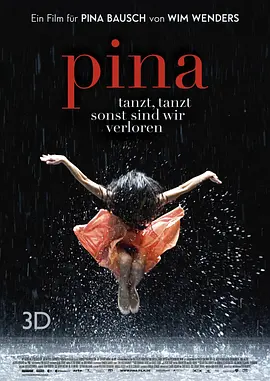
皮娜2011
Wim Wenders, a master of his own art form, was captivated by Pina Bausch’s *Café Müller*. They dreamt of a 3D collaboration, a melding of cinematic depth with the fluidity of dance. Then, tragedy struck. Pina was gone. A project turned into a memorial, a conversation with the absent. The film navigates her major works: *The Rite of Spring* – dirt, raw power – *Café Müller* – blindness, longing. We see the industrial city of Wuppertal as an extension of the stage. The 3D is a key here, not just a gimmick, but a way to inhabit the space with the dancers. To feel their breath, their sweat, to experience every nuance of their movement.




剧情简介
Wim Wenders, a master of his own art form, was captivated by Pina Bausch’s *Café Müller*. They dreamt of a 3D collaboration, a melding of cinematic depth with the fluidity of dance. Then, tragedy struck. Pina was gone. A project turned into a memorial, a conversation with the absent. The film navigates her major works: *The Rite of Spring* – dirt, raw power – *Café Müller* – blindness, longing. We see the industrial city of Wuppertal as an extension of the stage. The 3D is a key here, not just a gimmick, but a way to inhabit the space with the dancers. To feel their breath, their sweat, to experience every nuance of their movement.
播放线路
观影点评
The film transcends the usual boundaries. It’s a language, a conversation when words are insufficient. It's not a performance but an immersive experience. There is a presence, almost a ghost, in the bodies of the dancers. Wenders' eye is at the heart of it. It's a dance between the living and the departed. You see the dancers move from the theatre to the street, and there's a unique intensity to it. It really becomes a dialogue. It's not only a memorial, it's a work of art. 【电影介绍】 舞,舞吧,否则我们就要迷失了。这句话贯穿了整部作品的灵魂。在德国工业小城乌帕塔的悬挂电车下,在荒芜的矿山边缘,甚至在堆满泥土的剧院舞台上,一群舞者正用近乎自虐的力度挥洒着生命。这不是一部枯燥的艺术纪录片,而是电影大师维姆·文德斯写给现代舞女神皮娜·鲍什的一封极致深情的情书。 原本这应该是一次两位大师的强强联手,然而就在拍摄计划启动前夕,皮娜却突然因病离世。文德斯在巨大的悲恸中一度想要放弃,直到他意识到,皮娜的灵魂早已揉进了她那些舞者的骨血里。于是,镜头不再仅仅对准舞台,而是走进了森林、工厂和街头,让那些曾与皮娜朝夕相处的舞者们,用身体去诉说那些无法用言语表达的思念与震撼。 你会看到舞者们在泥土中翻滚,在飞溅的水花中狂奔,在狭窄的室内不断碰撞。电影巧妙地穿插了皮娜最具代表性的四部作品:充满原始生命力的《春之祭》、探讨孤独与隔阂的《穆勒咖啡馆》、在水光中狂欢的《月圆》,以及带着一丝戏谑与温柔的《交际场》。文德斯用他那极具深度感的镜头,打破了舞台与生活的界限,将观众直接拽进了那个充满张力、痛苦却又无比美丽的舞蹈世界。 【观影点评】 看这部电影的时候,我常常会忘记呼吸。文德斯最天才的地方在于,他没有选择平铺直叙地去记录皮娜的生平,而是抓住了皮娜艺术的核心:身体从来不会撒谎。那些舞者在镜头前沉默不语,但当他们开始摆动肢体,你会瞬间读懂什么是渴望,什么是绝望,什么是爱而不得的挣扎。 这种视觉上的冲击力是极其罕见的。在《春之祭》的片段里,你能清晰地看到泥土粘在舞者汗湿的皮肤上,感受到那种大地母性与死亡恐惧的剧烈摩擦。而在《穆勒咖啡馆》中,那种闭着眼在椅子丛林中穿梭的盲目与无助,简直像是一把钝刀,慢慢切开都市人内心最隐秘的孤独。 我最喜欢的一幕是,舞者们在乌帕塔的工业景观中起舞。这种强烈的人文艺术与冷硬工业文明的碰撞,产生了一种如梦似幻的超现实感。你会发现,舞蹈不再是高高在上的殿堂艺术,它就是呼吸,是行走,是每一个灵魂在遭遇困顿时的自我救赎。 这不仅是一部关于舞蹈的电影,更是一部关于如何在这个荒凉世界上活得热烈、活得鲜活的启示录。哪怕你从未踏入过剧院,哪怕你觉得自己看不懂现代舞,只要你还拥有感知情感的能力,就一定会被片中那种喷薄而出的生命能量所击中。皮娜虽然离去了,但通过这部电影,她仿佛永远活在那一次次肌肉的震颤与汗水的飞溅之中,提醒着每一个观众:去跳舞吧,去爱吧,去痛快地活着吧。
 0
0 0
0 0
0 0
0 0
0 0
0