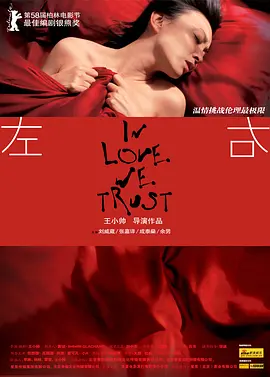
左右2007
The core? Mei Zhu and Xiao Lu, divorced and remarried, face a mother's ultimate dilemma. Their daughter, Hehe, has leukemia, and the only hope is a bone marrow transplant from a sibling. After failed attempts at artificial insemination, Mei Zhu proposes the unthinkable: conceiving a child "the old-fashioned way" with her ex-husband. This is where it gets interesting and morally complex, and what creates the moral and emotional crisis. We are talking about the ethics versus humanity. The question becomes, if a life can only be exchanged for another life's betrayal, would you do it? The film opens with a sharp image: "A woman sits across from her ex-husband, not to reminisce, but to ask for a child." A woman sits before her ex-husband, her gaze devoid of lingering affection, replaced by a chilling calm. She utters a demand that instantly thickens the air: "Let's have another child." This isn't a rekindling of old flames, but a wager on morality for salvation. Mei Zhu and Xiao Lu have been divorced for years, each having built seemingly stable families. Yet, their shared daughter, Hehe, is suddenly diagnosed with leukemia, and the only lifeline is umbilical cord blood from a sibling. After all medical avenues fail, this absurd yet resolute proposition becomes the sole saving grace. Wang Xiaoshuai directs the camera toward two broken, then reassembled, families. On one side, there's Lao Xie, Mei Zhu's current husband, whose silent forbearance borders on the agony of a saint. On the other, there's Dong Fan, Xiao Lu's current wife, whose collapse and struggle are palpable, torn between the dignity of modern civilization and the survival of a tiny life. As repeated artificial insemination attempts fail, Mei Zhu decides to take the final step - engaging in intimacy with her ex-husband, using the most primal method to conceive that "life-saving medicine." This transforms into more than a mere tale of illness; it becomes a critical test of human ethical boundaries. When the "good" of saving a life must be founded upon the "evil" of betraying a family, each character resembles a tightrope walker on a razor's edge. The film's Beijing is shrouded in a hazy gray, exuding an indelible sense of oppression, as four adults rub against each other within a narrow ethical crevice until they're bruised and bloodied.
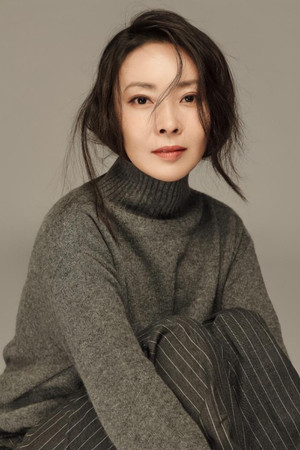
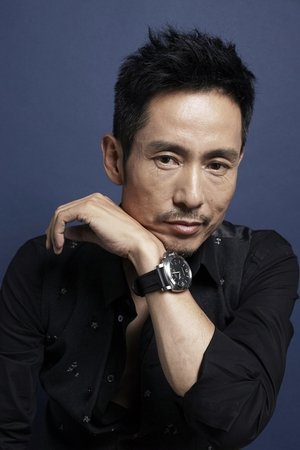
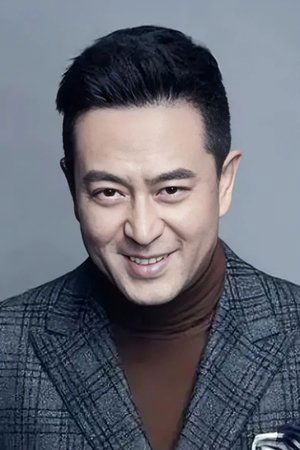


剧情简介
The core? Mei Zhu and Xiao Lu, divorced and remarried, face a mother's ultimate dilemma. Their daughter, Hehe, has leukemia, and the only hope is a bone marrow transplant from a sibling. After failed attempts at artificial insemination, Mei Zhu proposes the unthinkable: conceiving a child "the old-fashioned way" with her ex-husband. This is where it gets interesting and morally complex, and what creates the moral and emotional crisis. We are talking about the ethics versus humanity. The question becomes, if a life can only be exchanged for another life's betrayal, would you do it? The film opens with a sharp image: "A woman sits across from her ex-husband, not to reminisce, but to ask for a child." A woman sits before her ex-husband, her gaze devoid of lingering affection, replaced by a chilling calm. She utters a demand that instantly thickens the air: "Let's have another child." This isn't a rekindling of old flames, but a wager on morality for salvation. Mei Zhu and Xiao Lu have been divorced for years, each having built seemingly stable families. Yet, their shared daughter, Hehe, is suddenly diagnosed with leukemia, and the only lifeline is umbilical cord blood from a sibling. After all medical avenues fail, this absurd yet resolute proposition becomes the sole saving grace. Wang Xiaoshuai directs the camera toward two broken, then reassembled, families. On one side, there's Lao Xie, Mei Zhu's current husband, whose silent forbearance borders on the agony of a saint. On the other, there's Dong Fan, Xiao Lu's current wife, whose collapse and struggle are palpable, torn between the dignity of modern civilization and the survival of a tiny life. As repeated artificial insemination attempts fail, Mei Zhu decides to take the final step - engaging in intimacy with her ex-husband, using the most primal method to conceive that "life-saving medicine." This transforms into more than a mere tale of illness; it becomes a critical test of human ethical boundaries. When the "good" of saving a life must be founded upon the "evil" of betraying a family, each character resembles a tightrope walker on a razor's edge. The film's Beijing is shrouded in a hazy gray, exuding an indelible sense of oppression, as four adults rub against each other within a narrow ethical crevice until they're bruised and bloodied.
播放线路
观影点评
This film hits like a blunt knife, slowly peeling back the veneer of life's sentimentality. Wang Xiaoshuai's greatest strength lies in refusing to label any character with a moral judgment. Mei Zhu's obsession is suffocating, yet impossible to fault, driven by a mother's primal instinct; Lao Xie's empathy mirrors a deep, ancient well, evoking tears. Liu Weiwei delivers an intensity born of desperation, while Zhang Jiayi captures the complex duality of a middle-aged man's weakness intertwined with responsibility. Yu Nan's performance is exceptional – she barely utters a strong accusation, yet her sense of grievance at watching her territory being violated is enough to make the audience uncomfortable. The film's title, Zuo You (Left Right/Between), is brilliant. It hints at the difficulty of choices, but also the dramatic oscillations of human nature on both sides of the scale. What is right, and what is wrong? Is it about saving a child by destroying the trust of two families, or letting a life fade to preserve so-called moral purity? The director offers no definitive answer, simply laying this potentially devastating proposition before you. He wants you to spend two hours in silence, grappling with an authenticity, a helplessness, that feels utterly adult. It's more than a movie; it's a soul-searching inquiry into love, selfishness, and sacrifice. 【电影介绍】 一个女人坐在前夫面前,眼神里没有半点旧情复燃的温存,反而透着一种近乎疯狂的冷静。她开口提了一个让空气瞬间凝固的要求:我们再生个孩子吧。这不是为了挽回婚姻,而是一场赌上尊严与道德的绝望救赎。枚竹和肖路离婚多年,早已各自重组家庭,过着平静如水的日子。然而,他们年幼的女儿禾禾被确诊为白血病,在所有配型都宣告失败后,医生的一句建议成了最后的救命稻草:同胞手足的脐带血或许能救她的命。 这个荒诞又决绝的提议,像一颗重磅炸弹,彻底炸碎了两个家庭的宁静。枚竹的现任丈夫老谢,一个厚实得像大山一样的男人,被迫在爱妻的执念与男人的尊严之间反复摩擦;而肖路的现任妻子董帆,作为一名空姐,本有着体面光鲜的生活,此刻却要眼睁睁看着丈夫走向前妻的床榻。 随着人工受精的一次次失败,死神的脚步越来越近。枚竹决定走向那最后一步——和前夫发生真实的肉体关系。导演王小帅把镜头对准了这四个陷入泥淖的成年人,在灰蒙蒙的都市背景下,记录下他们在伦理缝隙里的每一次呼吸与挣扎。这不再仅仅是一个救助患儿的故事,而是一场关于人伦底线的极限测试,每前进一步,都是对现有人际关系的毁灭性打击。 【观影点评】 这部电影就像一把生了锈的钝刀子,一点点割开生活温情脉脉的面纱,露出底下血淋淋的真相。它最狠辣的地方在于,没有给任何一个角色安排所谓的反派剧本。枚竹的偏执源于母爱,老谢的隐忍源于深情,董帆的抗拒源于尊严,肖路的摇摆源于愧疚。每个人都有充足的理由去坚持自己,却又在现实的重压下不得不一寸寸让步。 刘威葳演活了一个被绝望逼到墙角的母亲,她那种近乎神经质的冷静,让人感到窒息却又无法苛责。张嘉益则精准地捕捉到了中年男人的那种无力感,在责任与背叛之间左右为难。余男的表演更是一绝,她不需要歇斯底里,仅仅是坐在车里一个委屈的眼神,就足以让观众感受到那种被全世界抛弃的寒意。 电影取名左右,实在是精妙绝伦。它指的不仅是人在道德天平两端的剧烈晃动,更是人性在极端境遇下的变形。到底是该为了拯救一个生命而践踏现有的婚姻契约,还是为了保全道德洁癖而眼睁睁看着生命凋零?导演没有给出标准答案,他只是把这个无解的命题赤裸裸地摊开在你面前。看完之后,你会发现生活远比电影复杂,那种真实到骨子里的压抑感,会像冬日的雾霾一样,在心里久久挥之不去。
 0
0 0
0 0
0 0
0 0
0 0
0