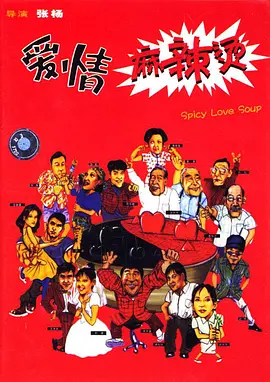
爱情麻辣烫
The bustling streets of 1990s Beijing, the aroma of spicy soup filling the air; a young couple, on the cusp of marriage, are immersed in wedding preparations. This film, shot in 1997 and released in 1999, unfolds like a slow-motion tapestry of the times, exposing the most hidden, most authentic facets of love without reservation. The film is woven together through the lens of a soon-to-be married couple, played by Wang Xuebing and Liu Jie. Amidst the mundane of choosing furniture and taking wedding photos, they stumble upon five completely different lives. There's the pure innocence of budding romance in a school setting, as a teenager goes to great lengths just to capture the voice of their crush. There's a pair of city dwellers passionately kissing in a photo booth, desperate to set their passion ablaze. We see a couple finding solace in toys in the midst of a monotonous marriage. There are the middle-aged couple, attempting a dignified farewell meal before their divorce. The story even extends to elderly individuals cautiously probing each other's feelings over a Mahjong game in the golden light of dusk. Each story is a premonition of the future, a review of the past. You can see the shadow of your first love in Gao Yuanyuan's naive profile, feel the weight of time in Pu Cunxin's helpless expression. These seemingly unrelated fragments ultimately converge into one overarching question: as the wedding carpet is laid out, are we truly prepared to face the life's spicy, savory, and complex soup?






剧情简介
The bustling streets of 1990s Beijing, the aroma of spicy soup filling the air; a young couple, on the cusp of marriage, are immersed in wedding preparations. This film, shot in 1997 and released in 1999, unfolds like a slow-motion tapestry of the times, exposing the most hidden, most authentic facets of love without reservation. The film is woven together through the lens of a soon-to-be married couple, played by Wang Xuebing and Liu Jie. Amidst the mundane of choosing furniture and taking wedding photos, they stumble upon five completely different lives. There's the pure innocence of budding romance in a school setting, as a teenager goes to great lengths just to capture the voice of their crush. There's a pair of city dwellers passionately kissing in a photo booth, desperate to set their passion ablaze. We see a couple finding solace in toys in the midst of a monotonous marriage. There are the middle-aged couple, attempting a dignified farewell meal before their divorce. The story even extends to elderly individuals cautiously probing each other's feelings over a Mahjong game in the golden light of dusk. Each story is a premonition of the future, a review of the past. You can see the shadow of your first love in Gao Yuanyuan's naive profile, feel the weight of time in Pu Cunxin's helpless expression. These seemingly unrelated fragments ultimately converge into one overarching question: as the wedding carpet is laid out, are we truly prepared to face the life's spicy, savory, and complex soup?
播放线路
观影点评
It is difficult to find a film that captures this level of authenticity, this blend of everyday life and spiritual sensitivity. The film does not talk about world-shattering vows; instead, it focuses on the smallest details of life. Director Zhang Yang cleverly uses Spicy Love Soup as a metaphor; love is not an unattainable work of art, but rather the bubbling red oil in a street-side stall, where some eat heartily and are left shouting for more, while others are moved to tears but find themselves unable to put down their chopsticks. Watching the faces of those who are now huge stars on the big screen - Xu Jinglei's vivaciousness, Gao Yuanyuan's purity, Wang Xuebing's honesty - it offers a surreal sense of time travel. Beijing was not so crowded back then, and people's love seemed so much more resolute. The most moving aspect of the film is its honesty; it does not label any relationship as perfect, but rather displays the fragility and resilience of love at various points in our lives. The movie's pace is like a lively urban melody, finding a subtle balance between realism and romance. It reminds us that love is not an ending, but a continuous flowing process. Whether you are currently in the dizziness of new love, or tired of mundane housework, you can find a commonality in this film of over twenty years ago. It is not just a film about love, but a record of how time carves our hearts. 【电影介绍】喧闹的九十年代北京街头,热气腾腾的麻辣烫摊位前,一对即将步入婚姻殿堂的年轻人正忙着筹备婚礼。这部拍于九十年代末的电影,就像一幅徐徐展开的时代长卷,把爱情里最隐秘也最真实的五个切面,毫无保留地呈现在观众面前。 故事由王学兵和刘婕饰演的准夫妻穿针引线,他们在挑选家具、拍摄婚纱照的琐碎日常中,偶然撞见了五段截然不同的人生。这里有校园里情窦初开、为了录下心上人声音而费尽心思的纯真少年;有在快照亭里疯狂热吻、恨不得把激情燃尽的都市男女;有在平庸婚姻里靠着玩具寻找慰藉的小夫妻;有在离婚前夕试图用最后一顿饭体面告别的中年夫妇;甚至还有在夕阳余晖下,通过麻将局小心翼翼试探心意的老者。 每一个故事都是一次对未来的预演,也是对过去的复盘。你会在高圆圆青涩的侧脸里看到初恋的影子,也会在濮存昕无奈的眼神中感受到岁月的重击。这些看似不相关的片段,最终汇聚成一个终极疑问:当婚姻的红地毯铺开时,这对年轻人真的准备好去面对那盆五味杂陈、麻辣咸鲜的人生之汤了吗? 【观影点评】现在的电影很难再拍出这种既有烟火气又透着灵气的质感了。它不讲什么惊天动地的誓言,而是把镜头对准了生活最细碎的纹理。导演张杨非常聪明地用麻辣烫作为隐喻,爱情不是什么高不可攀的艺术品,它就是街头巷尾那一锅翻滚的红油,有人吃得大汗淋漓直呼过瘾,有人被辣得眼泪横流却舍不得放下筷子。 看着大银幕上那些如今已成巨星的脸孔,你会有一种穿越时空的错觉。徐静蕾的灵动、高圆圆的清纯、王学兵的憨厚,那时候的他们还没被岁月的风霜覆盖,眼神里全是戏。电影最动人的地方在于它的诚实,它没有给任何一段感情贴上完美的标签,而是坦然地展示了爱情在不同生命周期里的脆弱、尴尬与坚韧。 电影的节奏像一首轻快的城市小调,在写实与浪漫之间找到了微妙的平衡。它告诉我们,爱情不是一个静止的终点,而是一个不断流动的过程。无论你是正处于热恋的眩晕中,还是在琐碎的家务里感到疲惫,都能在这部二十多年前的作品里,找到属于自己的那一点共鸣。这不仅是一部关于爱情的电影,更是一部关于时间如何雕刻人心的生活纪录。
 0
0 0
0 0
0 0
0 0
0 0
0