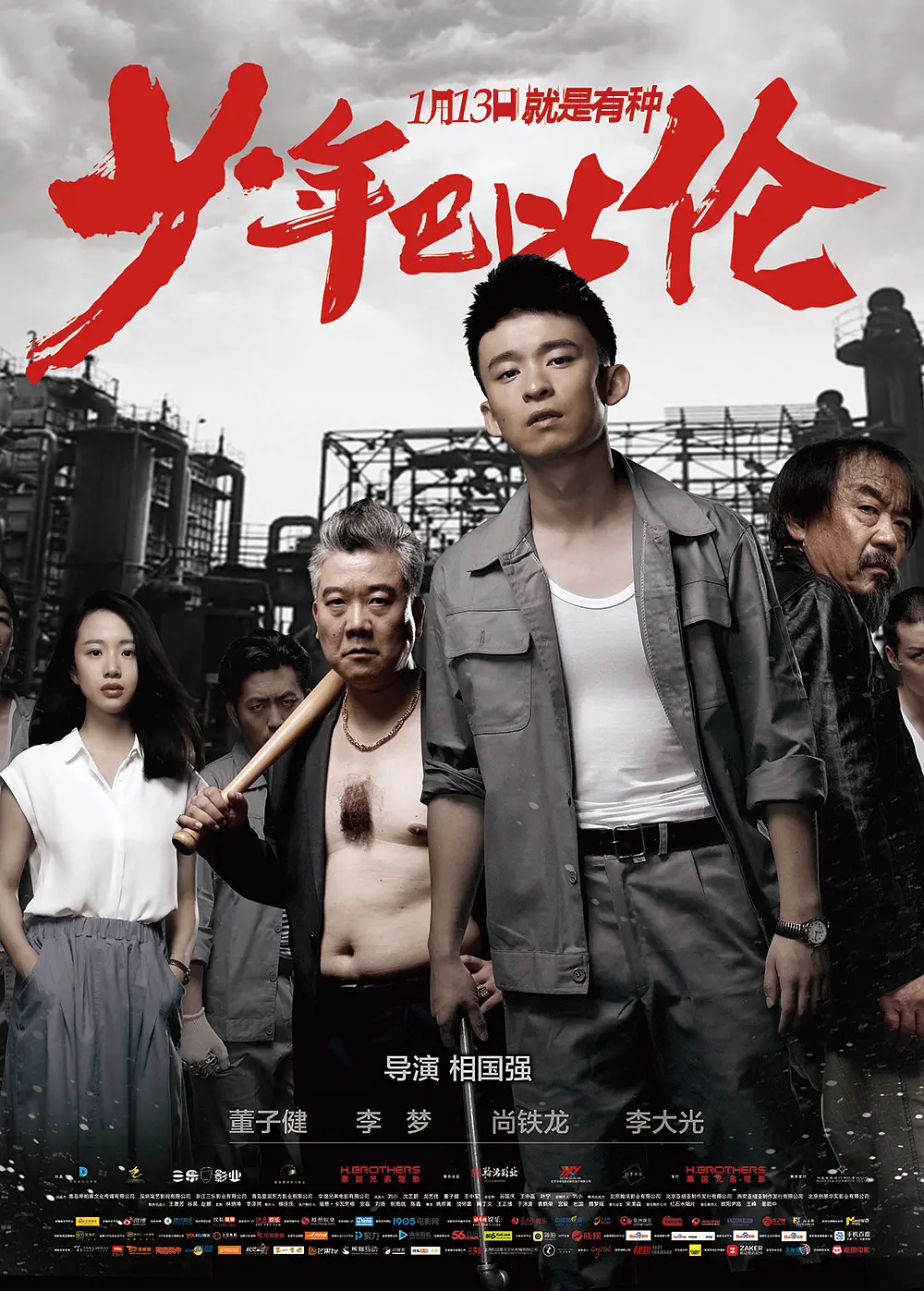
少年巴比伦
In the 1990s, Daicheng's air was constantly filled with a cloyingly sweet saccharin scent. In this huge, rusty beast of a chemical factory, twenty-year-old Lu Xiaolu was squandering his restless youth. He's a standard hooligan, following his boss, whose nickname is Bull King. He can't tighten screws or replace light bulbs properly. His best talents are climbing walls to skip work and getting into fights. For Lu Xiaolu, life is a long, boring prank until Bai Lan, the girl in the white coat, riding her bicycle, breaks into his vision. Bai Lan is the factory doctor, cold, elegant, carrying a poetry-like quality that is at odds with this dilapidated factory. Lu Xiaolu's heart, soaked in machine oil, races for the first time because of an eye contact. He begins a clumsy pursuit, looking for her in the steam of the boiler room, creating chance encounters in the rusty family courtyard. However, this is not just a simple story of a poor boy falling in love with a goddess. On the eve of the upcoming massive layoffs, the factory's chimneys are still smoking, but everyone's fate has quietly deviated from the track. Lu Xiaolu's first love is destined to collide with the most dazzling and piercing sparks in the torrent of the era. **Shaping the Review** Now, for the review section... I'm thinking about starting it with a feeling, or maybe a quote-like sentiment. I need to get to the analysis. I have to focus on the contrast between the decaying industrial age and the vibrant youth, highlight Dong Zijian's acting and Li Meng's ethereal quality. The theme is, it's not just a romance, it's an elegy for an era. I'm working on the text...





剧情简介
In the 1990s, Daicheng's air was constantly filled with a cloyingly sweet saccharin scent. In this huge, rusty beast of a chemical factory, twenty-year-old Lu Xiaolu was squandering his restless youth. He's a standard hooligan, following his boss, whose nickname is Bull King. He can't tighten screws or replace light bulbs properly. His best talents are climbing walls to skip work and getting into fights. For Lu Xiaolu, life is a long, boring prank until Bai Lan, the girl in the white coat, riding her bicycle, breaks into his vision. Bai Lan is the factory doctor, cold, elegant, carrying a poetry-like quality that is at odds with this dilapidated factory. Lu Xiaolu's heart, soaked in machine oil, races for the first time because of an eye contact. He begins a clumsy pursuit, looking for her in the steam of the boiler room, creating chance encounters in the rusty family courtyard. However, this is not just a simple story of a poor boy falling in love with a goddess. On the eve of the upcoming massive layoffs, the factory's chimneys are still smoking, but everyone's fate has quietly deviated from the track. Lu Xiaolu's first love is destined to collide with the most dazzling and piercing sparks in the torrent of the era. **Shaping the Review** Now, for the review section... I'm thinking about starting it with a feeling, or maybe a quote-like sentiment. I need to get to the analysis. I have to focus on the contrast between the decaying industrial age and the vibrant youth, highlight Dong Zijian's acting and Li Meng's ethereal quality. The theme is, it's not just a romance, it's an elegy for an era. I'm working on the text...
播放线路
观影点评
This film is like an old dream mixed with the smell of gasoline and hormones. It doesn't follow the clichés of overly sentimental writing, but instead uses a near-wild vitality to recreate the unbridled 1990s. Director Xiang Guoqiang uses a very personal cinematic language, turning a lifeless factory into a magical realm with a sense of the Jianghu. Dong Zijian brings to life that innate hooligan spirit, while Li Meng contributes the most unforgettable "factory girl" image on the Chinese big screen. She's not just Lu Xiaolu's desire projection, but also the last bright color of that era. What moves me most is that the film doesn't deliberately sensationalize. It has kneaded the restlessness, confusion of youth, and the feeling of helplessness in the face of epochal changes into the steam of the factory workshop and the sound of the bicycle bell. It tells us that everyone has once had a "Shaonian Balilian" in their heart, where there is the purest love and the most resolute farewell. When you see Lu Xiaolu running on the rooftop, with the setting sun and the abandoned chimney in the background, you suddenly realize 【电影介绍】 九十年代的戴城,空气里终年飘散着一股甜到发腻的糖精味儿。在这座巨大的、像生锈巨兽般的化工厂里,二十岁的路小路正挥霍着他那无处安放的青春。他是个标准的小混混,跟着外号牛魔王的师傅混日子,拧螺丝拧不紧,换灯泡换不利索,最擅长的事是翻墙翘班和打群架。对于路小路来说,生活就是一场漫长且无聊的恶作剧,他的世界里只有满身的机油味和一群同样游手好闲的兄弟。 直到那个穿着白大褂、骑着单车的女孩白蓝闯进了他的视线。白蓝是厂里的医生,清冷、优雅,带着一种与这破败工厂格格不入的诗意。路小路那颗被铁锈封印的心,第一次因为一个眼神而狂跳不止。他开始笨拙地追求,在锅炉房的蒸汽里寻找她的身影,在满是煤渣的家属院里制造偶遇。然而,这不只是一个穷小子爱上女神的简单故事,在那个大下岗潮即将来临的前夜,工厂的烟囱依然在冒烟,但每个人的命运都已经悄然偏离了轨道。 【观影点评】 这部电影像是一场混杂着汽油味和荷尔蒙的旧梦,它没有走那种伤痛文学的烂俗套路,而是用一种近乎狂野的生命力,还原了那个野蛮生长的九十年代。导演相国强用极具个人风格的镜头语言,把一座死气沉沉的工厂拍出了江湖气和魔幻感。董子健演活了那种骨子里的混不吝,而李梦则贡献了中国大银幕上极具韵味的工厂女神形象,她不仅是路小路的欲望投射,更是那个沉重时代里最后的一抹亮色。 最打动人的地方在于,电影并没有刻意去煽情,它把青春的躁动、迷茫和那种面对时代巨变时的无力感,都揉碎在了工厂车间的蒸汽和单车的铃声里。它告诉我们,每个人心里都曾有过一个少年巴比伦,那里有最纯粹的爱慕,也有最决绝的告别。当你看到路小路在屋顶奔跑,背景是落日余晖下的废旧烟囱时,你会突然意识到,那不只是他的青春,那是整整一代人被揉皱后又随风飘散的旧时光。这绝对是一部被低估的佳作,值得你在某个深夜,静下心来去感受那股甜腻又苦涩的滋味。
 0
 0
 0
 0
 0
 0