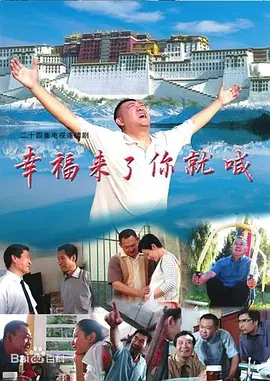
幸福来了你就喊
** Okay, so I was looking at this film, 《幸福来了你就喊》 (Happiness is Calling/When Happiness Comes, Shout Out), directed by Wen Chenglin. It's based on Chi Li's novel, "有了快感你就喊" (If You Have Pleasure, Shout Out) – and from what I've seen, it's pretty compelling. The story is set in China during a period of massive social transition. The main character, Bian Rongda, played by Jiang Wu, is a smart guy, but he's utterly repressed. He's got this quiet endurance about him... like a muted television. He follows his father's expectations, gives up on true love, and ends up in this mediocre marriage and career. He's struggling with workplace competition, the pressures from his family - his mother-in-law, his wife, his father – and this moral dilemma involving a welfare house. Then, he encounters a young, energetic colleague named Xiao Ke, and she really shakes up his stifled world. **





剧情简介
** Okay, so I was looking at this film, 《幸福来了你就喊》 (Happiness is Calling/When Happiness Comes, Shout Out), directed by Wen Chenglin. It's based on Chi Li's novel, "有了快感你就喊" (If You Have Pleasure, Shout Out) – and from what I've seen, it's pretty compelling. The story is set in China during a period of massive social transition. The main character, Bian Rongda, played by Jiang Wu, is a smart guy, but he's utterly repressed. He's got this quiet endurance about him... like a muted television. He follows his father's expectations, gives up on true love, and ends up in this mediocre marriage and career. He's struggling with workplace competition, the pressures from his family - his mother-in-law, his wife, his father – and this moral dilemma involving a welfare house. Then, he encounters a young, energetic colleague named Xiao Ke, and she really shakes up his stifled world. **
观影点评
** Jiang Wu's face is a study in both earnestness and stoicism in this movie. He plays Bian Rongda like a man who has taken the full brunt of life's blows. He's like a top that’s been worn smooth by constant use, spinning mechanically under the weight of his father's expectations, his wife's complaints, and his mother-in-law's domineering nature. The story focuses on this incredibly dynamic period of change, and we see this naturally intelligent man with a fiery spirit cut off his first love in order to gain a secure life. He just gets stuck in this ill-fitting marriage. At work, he’s a deputy section chief who gets cheated out of housing allocations by his colleagues; at home, he's basically a son-in-law who has to mind his tone. This sense of mid-life frustration is conveyed so beautifully and precisely. It's like you can almost *feel* it. Then, this young woman, Xiao Ke, enters his life. She's a splash of bright color that bursts into his drab world. It makes you wonder, is this a moment of salvation or the start of something destructive? When all of this repression reaches its breaking point, will this man, who has learned to be silent, finally find the courage to shout at fate? The most striking thing is the realism. It's not one of those overly optimistic films. It just shows the brutal and most frustrating aspects of life without any filters. Jiang Wu's performance is phenomenal. He portrays the goodness that hides beneath his weakness, and the numbness that comes from life's constant beatings. You see that Bian Rongda is actually a reflection of many of us, stuck in this tug-of-war between responsibility and self-preservation, and we just become this transparent shell. The title says "When Happiness Comes, Shout Out," but the movie really asks: can someone who's had the fire in their soul snuffed out, recognize happiness anymore? Watching him constantly retreat for the sake of a home, saving face, and trying to achieve everyone else’s definition of perfection is absolutely chilling. What's so powerful is that this film shows us the greatest tragedy isn’t disaster, but the gradual loss of our ability to even raise our voices, through years of compromise. If you’ve ever felt suffocated by life, this film might make you see yourself in that moment where you want to break free, but are too weak to do so. 【电影介绍】姜武那张写满了憨厚与隐忍的脸,在这部剧里简直就是一个行走的人间受气包。他饰演的卞容大,就像是一只被生活磨平了棱角的陀螺,在父亲的期望、妻子的抱怨和丈母娘的强势中机械地转个不停。故事把镜头对准了那个充满变动的转型时代,一个原本天资聪颖、内心有火的男人,为了所谓的稳妥,生生掐断了初恋,钻进了一个并不合身的婚姻套子里。 在单位,他是个连分房名额都要被同事算计的副科长;在家里,他是那个连大声说话都要看人脸色的上门女婿。那种中年男人特有的憋屈感,被镜头细腻地铺陈开来,仿佛能闻到那种旧办公室里陈腐的纸张味。直到一个叫小柯的年轻女孩闯入他的生活,像一抹突如其来的亮色,撕开了他灰扑扑的世界。这种情感冲击,是久旱逢甘霖的救赎,还是加速崩塌的诱因?当所有的压抑积累到临界点,这个习惯了沉默的男人,到底有没有勇气对着命运大喊一声? 【观影点评】看完这部剧,我最大的感受就是一种如鲠在喉的真实。池莉的原著底子打得极好,它不是那种悬浮的职场励志,而是把生活最粗糙、最无奈的一面赤裸裸地摊给你看。姜武的演技真的绝了,他把那种软弱背后的善良,以及善良被生活凌辱后的麻木演到了骨子里,哪怕只是一个低头叹气的背影,都写满了中年人的力不从心。 你会发现,卞容大这个角色其实是我们很多人的缩影,在责任和自我之间反复横跳,最后把自己活成了一个透明的空壳。剧名虽然叫幸福来了你就喊,但整部剧其实是在探讨:一个被生活阉割了血性的人,还认得出幸福吗?那种为了房子、为了面子、为了别人眼中的圆满而不断退缩的过程,看得人心惊肉跳。它最狠的地方在于,它告诉我们,最大的悲剧不是遭遇了什么横祸,而是在日复一日的妥协中,逐渐丧失了喊出来的本能。如果你也曾感到被生活憋得喘不过气,这部剧一定会让你在某个瞬间,看到那个拼命想挣脱却又无力垂手的自己。
 0
 0
 0
 0
 0
 0