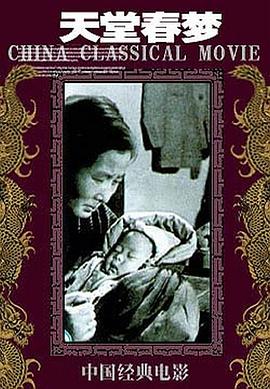
天堂春梦
** (Film Introduction): The story is straightforward, but the context is what elevates it. Post-war Shanghai, hope is quickly replaced by desperation. Architect Ding Jianhua and his wife return home, expecting a fresh start, only to be met with skyrocketing prices and a severe housing shortage. They're forced to rely on a wealthy relative, Gong, who epitomizes the corruption of the era. He's a collaborator who's bought his way to respectability with gold, representing the era. The narrative juxtaposes their misery—poverty, a baby given up and then taken back from the Gongs, the streets—with the Gongs' ostentatious wealth, even treating children as playthings. Ultimately, the architect’s and his wife's dignity is ground down by hunger, which is further exacerbated when they are finally thrown out on the street. The film's most powerful moment: Ding realizes he's sleeping under the eaves of the very building he designed. He climbs to the roof, surveys the city lights, and finds none that belong to him. * **



剧情简介
** (Film Introduction): The story is straightforward, but the context is what elevates it. Post-war Shanghai, hope is quickly replaced by desperation. Architect Ding Jianhua and his wife return home, expecting a fresh start, only to be met with skyrocketing prices and a severe housing shortage. They're forced to rely on a wealthy relative, Gong, who epitomizes the corruption of the era. He's a collaborator who's bought his way to respectability with gold, representing the era. The narrative juxtaposes their misery—poverty, a baby given up and then taken back from the Gongs, the streets—with the Gongs' ostentatious wealth, even treating children as playthings. Ultimately, the architect’s and his wife's dignity is ground down by hunger, which is further exacerbated when they are finally thrown out on the street. The film's most powerful moment: Ding realizes he's sleeping under the eaves of the very building he designed. He climbs to the roof, surveys the city lights, and finds none that belong to him. * **
播放线路
观影点评
** (Film Review/Recommendation): This is not an easy watch. It evokes a feeling of suffocation. Not from gore or fear, but from the raw injustice. Tang Xiaodan's direction is sharp and unflinching, stripping away the glamour to expose the ugliness beneath. Lan Ma and Shangguan Yunzhu's portrayals of Gong and his wife are absolutely brilliant, capturing the coarseness and hypocrisy of the nouveau riche perfectly. Yunzhu's cold indifference and disdain are chilling. Shi Yu as the architect embodies the era's frustrated conscience. The more upright and talented he is, the more tragic his fall. The film’s end is particularly potent. The man who built the city is now marginalized by it. The film forces us to confront this question: Why are those who create wealth left to wander, while those who steal it celebrate? This isn't just a period piece; it's a mirror reflecting the darkness. It shows how the promised "heavenly dream" was actually a nightmare. For those who appreciate the depth of character and social insight of old Shanghai cinema, this is a must-see. 【电影介绍】一个满腹才华的建筑师,亲手设计了整座城市最豪华的摩天大楼,结果到头来,他全家人唯一的容身之所,竟然是那栋大楼冰冷的屋檐。这种近乎荒诞的黑色幽默,就真实地发生在这部拍摄于1947年的经典老片里。 故事发生在抗战胜利后的上海,建筑师丁建华带着满腔抱负回乡,本以为迎接他的是重建家园的希望,谁知现实却是一记响亮的耳光。由于一房难求,他只能带着怀孕的妻子寄居在远亲龚某家里。这个龚某是个典型的投机分子,抗战时靠发国难财起家,胜利后又豪掷五百根金条买了个假身份,摇身一变成了体面的功臣。 在这座金碧辉煌的宅子里,尊严被一点点碾碎。龚某夫妇不仅生活奢靡,甚至连丁建华刚出生的孩子都成了他们打发时间的玩物。当丁建华最终被赶出家门,带着妻儿流落街头时,最讽刺的一幕出现了:他猛然抬头,发现自己正蜷缩着避雨的那栋大厦,正是他多年前呕心沥血设计的杰作。他走上顶楼,看着脚下的万家灯火,却找不到一盏属于自己的灯,那种从心底涌出的悲愤,将他推向了无法挽回的深渊。 【观影点评】看这部电影的时候,你会有一种强烈的窒息感,那种感觉不是来自恐怖镜头,而是来自一种深不见底的社会不公。导演汤晓丹用极其冷静且锋利的镜头,剥开了那个时代最丑陋的一面。 演员的表演简直是教科书级别的。蓝马饰演的暴发户和上官云珠饰演的阔太太,把那种刻薄、虚伪与冷漠演到了骨子里,尤其是上官云珠,她的一颦一笑都透着一种对底层人命的漠视,让人看得脊背发凉。而石羽饰演的建筑师,则代表了那个时代最无奈的良知。他越是正直、越是有才华,在那个畸形的社会里就显得越是滑稽和可悲。 最让我震撼的是电影结尾的处理,那是一种结构性的悲剧力量。一个建造了城市的人,却被城市像垃圾一样排挤出去,这种强烈的反差在几十年后的今天看依然具有震撼人心的力量。它不仅仅是在讲一个家庭的破灭,更是在拷问:当社会规则被金钱彻底扭曲,普通人的才华与勤奋是否还有意义? 这不只是一部老电影,它是一面照进历史深处的镜子。它告诉我们,那个时代所谓的春梦,其实是一场彻头彻尾的噩梦。如果你想领略早期中国电影那种扎实的人物刻画和深刻的社会洞察,这部《天堂春梦》绝对是不容错过的神作。
 0
0 0
0 0
0 0
0 0
0 0
0